
Deck Stair
Installation
Build safe, code-compliant deck stairs that connect your outdoor living space to your yard. We design and install straight runs, spiral staircases, switchback configurations, and multi-level stair systems—engineered for Minnesota's climate and your home's architecture.
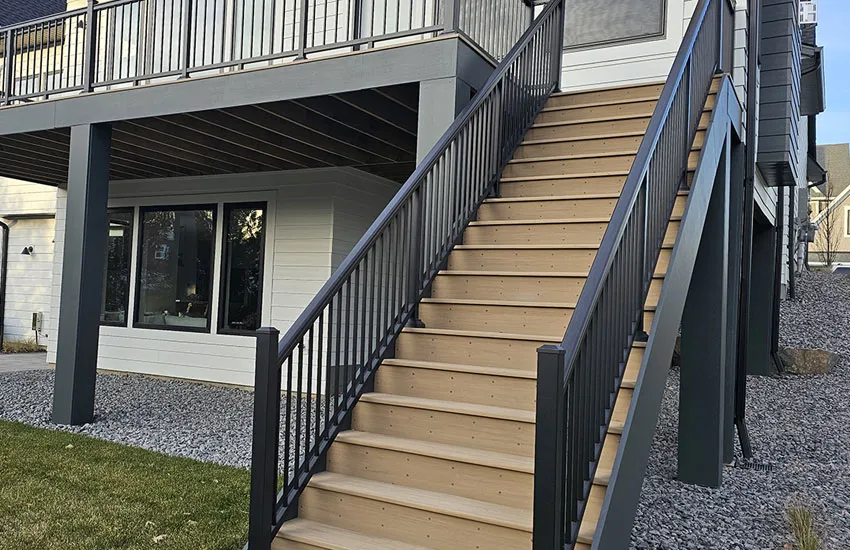
Deck Stairs Built for Safety and Style
Your deck stairs carry more traffic than any other part of your outdoor structure. Every trip to the grill, every walk to the garden, every time the kids run down to the yard—your stairs need to handle it all while remaining safe, stable, and attractive.
We build deck stairs that meet Minnesota building code requirements and exceed them. Our stair systems use properly sized stringers, secure tread attachments, and integrated railing connections. The result: stairs that feel solid underfoot and last as long as your deck.
- Custom-cut stringers from pressure-treated lumber or steel
- Composite or wood treads matched to your deck surface
- Code-compliant riser heights and tread depths
- Integrated railing post connections for strength
- Non-slip surfaces for wet Minnesota weather
Deck Stair Designs We Build
From simple straight runs to complex multi-level systems, we design stairs that fit your deck layout, yard slope, and traffic patterns.
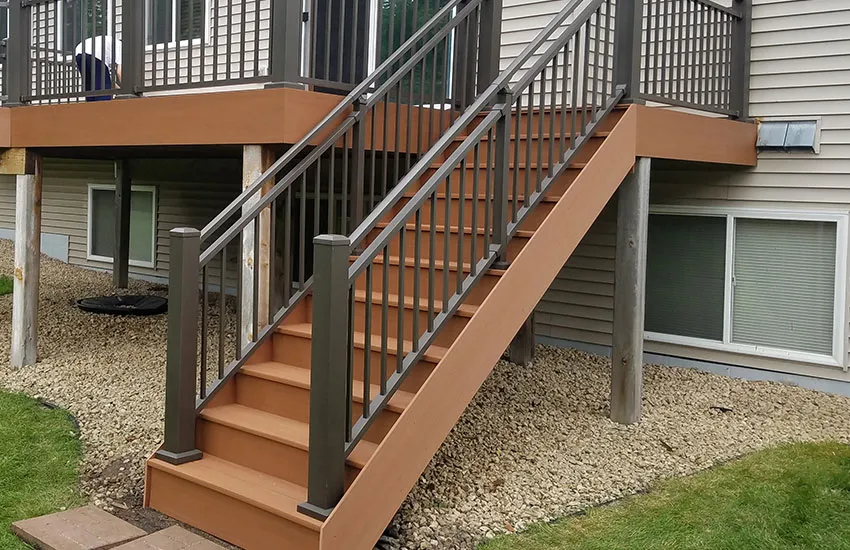
Straight Stairs
The most common configuration. A single run from deck to ground with uniform treads. Works well for decks up to 8 feet high with adequate yard space for the stair footprint.
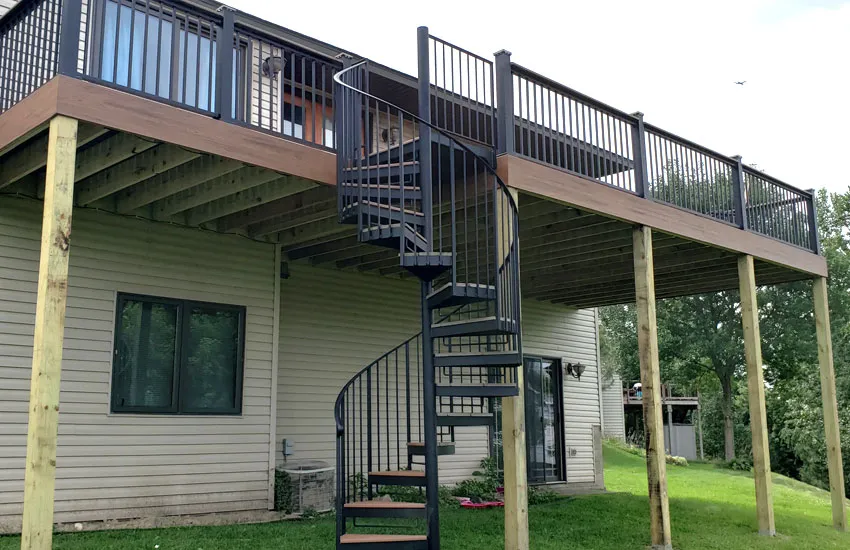
Spiral Staircases
Compact vertical access for tight spaces. Spiral stairs use a central post with pie-shaped treads. Ideal for high decks with limited yard footprint or as a secondary access point.
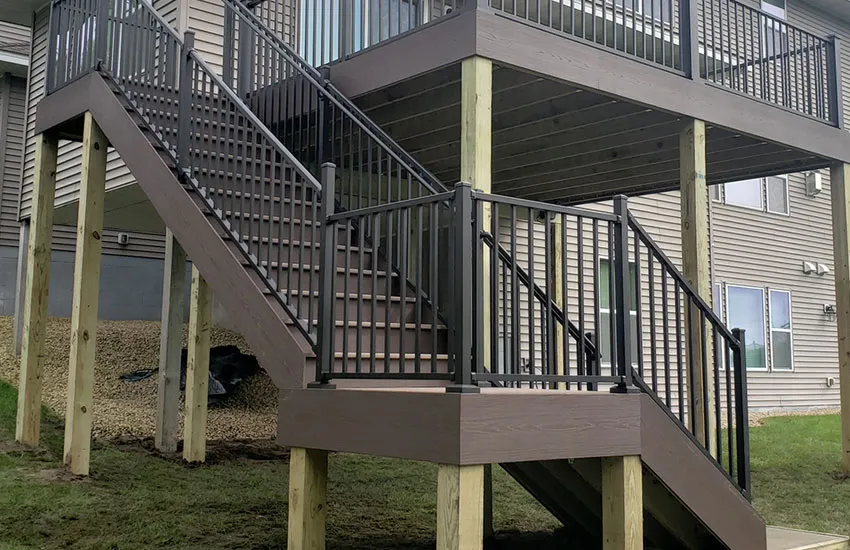
Switchback Stairs
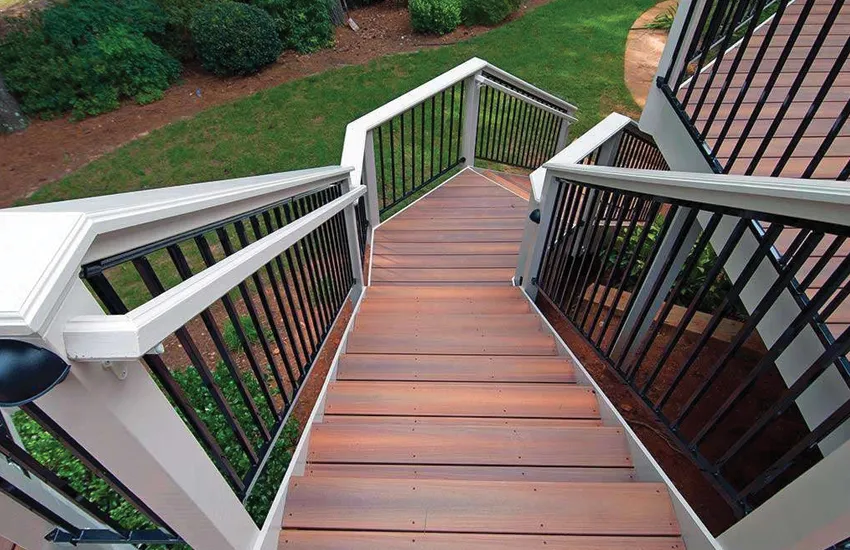
Two stair runs connected by a landing platform, turning 180 degrees. Reduces the horizontal footprint and provides a rest point. Required by code for vertical rises over 12 feet.
Landing Platforms
Intermediate platforms break up long stair runs. Useful for directional changes, resting points, or when the yard terrain requires it. Landings can extend living space with room for planters or seating.
L-Shaped Stairs
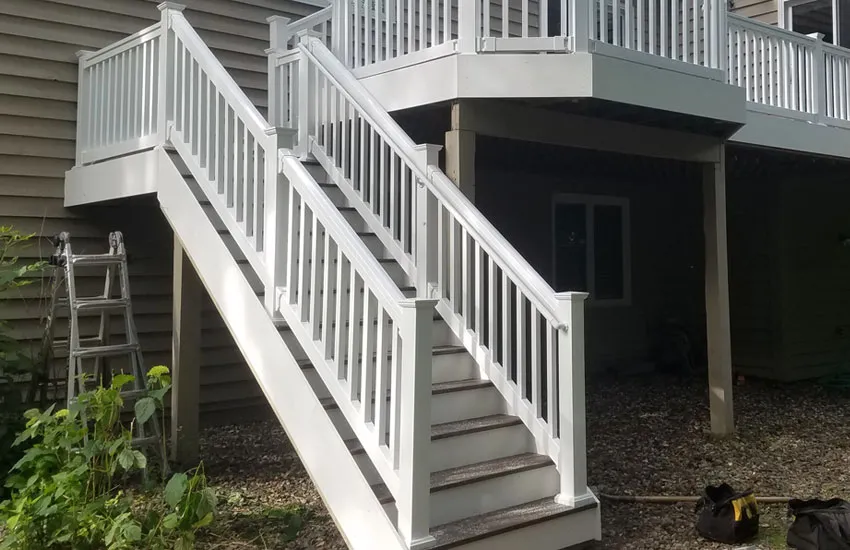
A 90-degree turn with a corner landing. Fits into corners and along house walls. Good option when a straight run would project too far into the yard or block windows.
Multi-Level Systems
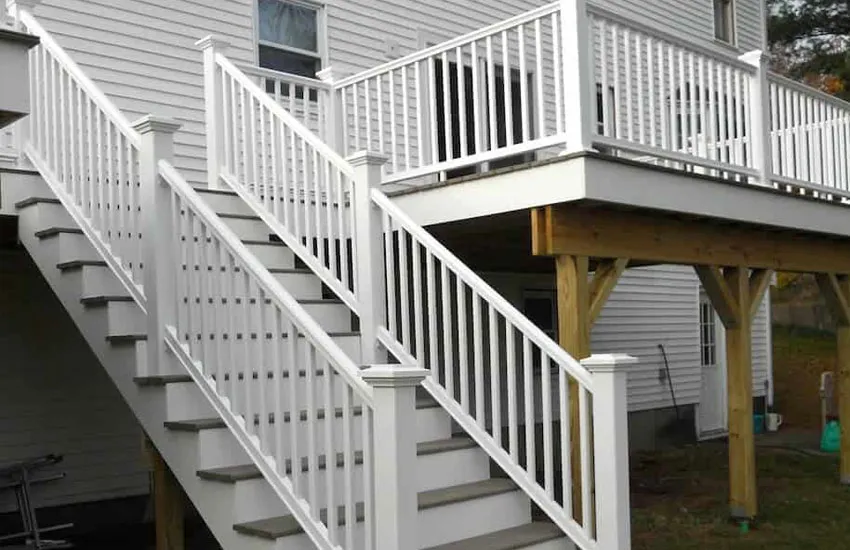
Connected stair runs serving multiple deck levels. We design integrated systems where each stair section aligns with deck transitions, creating a unified flow from house to yard.
Stair Materials and Construction
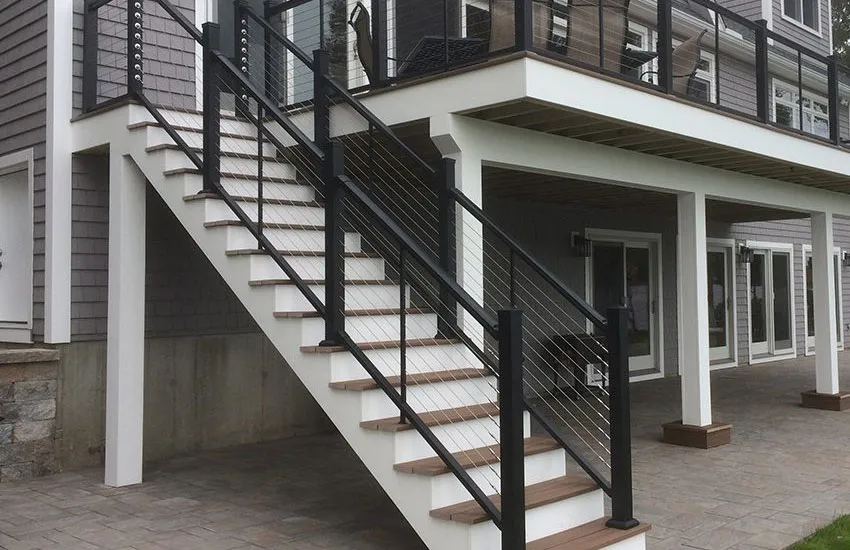
Deck stairs require materials that handle constant foot traffic, weather exposure, and structural loads. We select stair components based on durability, appearance, and compatibility with your existing deck.
Stringers: The angled supports that carry the treads. We use pressure-treated lumber (2x12 minimum) or steel stringers for spans over 4 feet. Proper stringer sizing prevents bounce and flex.
Treads: The horizontal stepping surface. Options include composite decking (matches your deck), pressure-treated wood, hardwood, or aluminum with non-slip surfaces. Tread material affects grip, maintenance, and appearance.
Risers: The vertical face between treads. Open risers create a lighter look; closed risers provide a finished appearance and prevent debris accumulation. Minnesota code allows open risers if the opening is under 4 inches.
View Custom Deck OptionsMinnesota Deck Stair Code Requirements
Every stair we build meets or exceeds Minnesota Residential Code requirements. Here are the key specifications we follow:
All risers must be between 4" and 7-3/4" high. Risers in a single stair run must be uniform within 3/8" tolerance. We typically target 7" to 7.5" for comfortable stepping.
Treads must be at least 10" deep from nosing to nosing. Deeper treads (11"-12") feel more comfortable but increase the stair's horizontal footprint.
Stairs must be at least 36" wide clear of handrails. We typically build 42"-48" wide for comfortable two-way traffic and moving furniture.
Stairs with 4 or more risers require continuous handrails on both sides, 34"-38" above tread nosings. Graspable handrail profiles required.
Vertical rises exceeding 12 feet require an intermediate landing. Landings must be at least as wide as the stair and minimum 36" in the direction of travel.
Stringers must bear on a concrete pad or approved footing at the bottom. Top connections to rim joist require approved hangers or direct bolting through the rim.
Deck Stair Projects
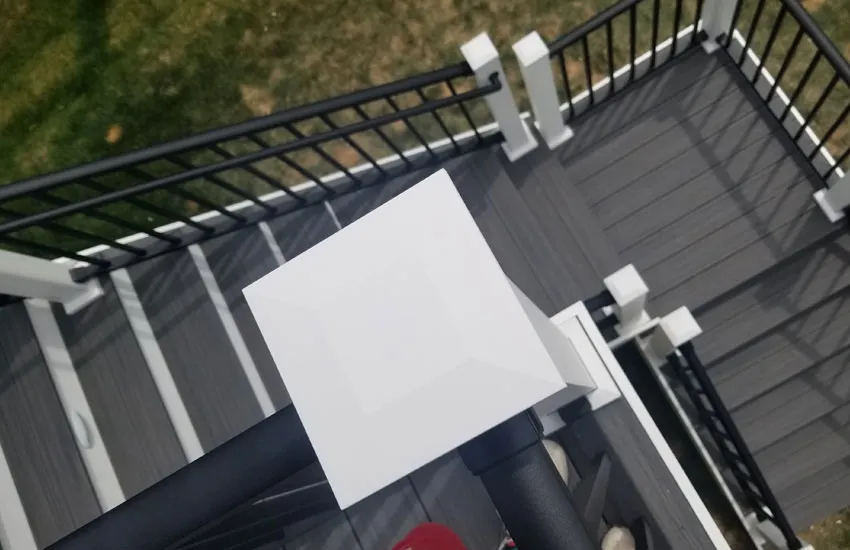
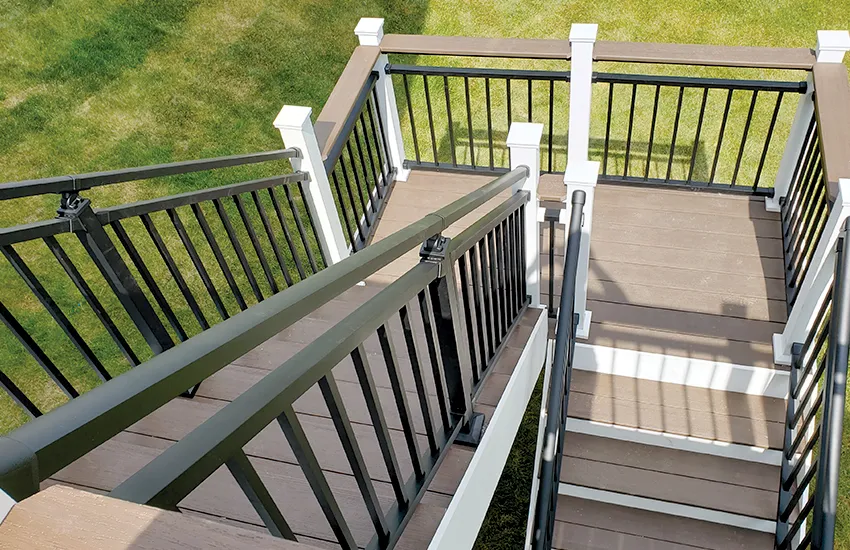
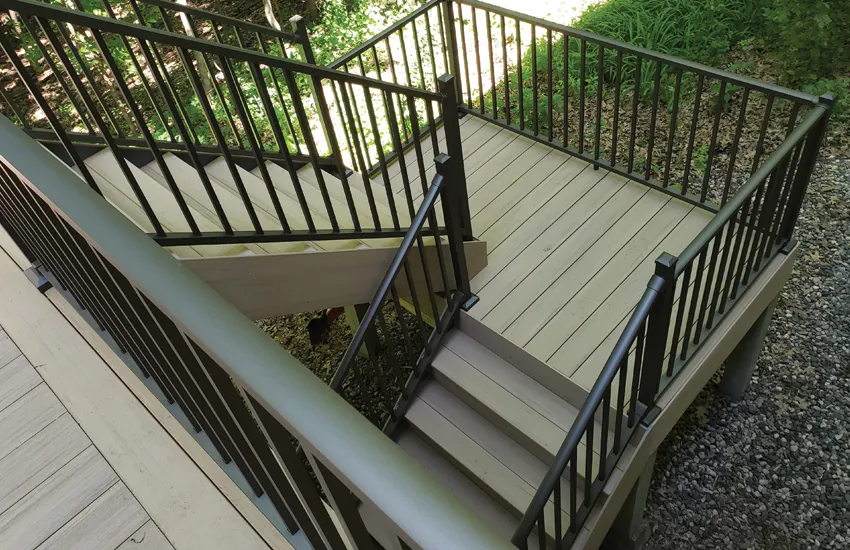
Recent stair installations throughout the Elk River area. Each project designed for the home's specific height, layout, and style requirements.
Deck Stair Installation Near You
We install deck stairs throughout the northwest Twin Cities metro. Click your city for local service information.
Complete Your Deck Project
Deck stairs pair with these services. Bundle features during new construction or upgrades for best value.
Ready for New
Deck Stairs?
Schedule a free consultation to discuss stair options for your deck. We'll measure your space, review configurations, and provide a detailed estimate.
Schedule Free Consultation